Mazda Furai
A Mazda Furai asset for a browser-based driving game, delivered as a vehicle body and reusable wheel module.
- Year
- 2025
- Discipline
- Browser-game asset modelling, UV mapping and texturing
- Tools
- Blender
- Status
- Complete
- Year
- 2025
- Discipline
- Browser-game asset modelling, UV mapping and texturing
- Tools
- Blender
- Status
- Complete
A modular vehicle asset
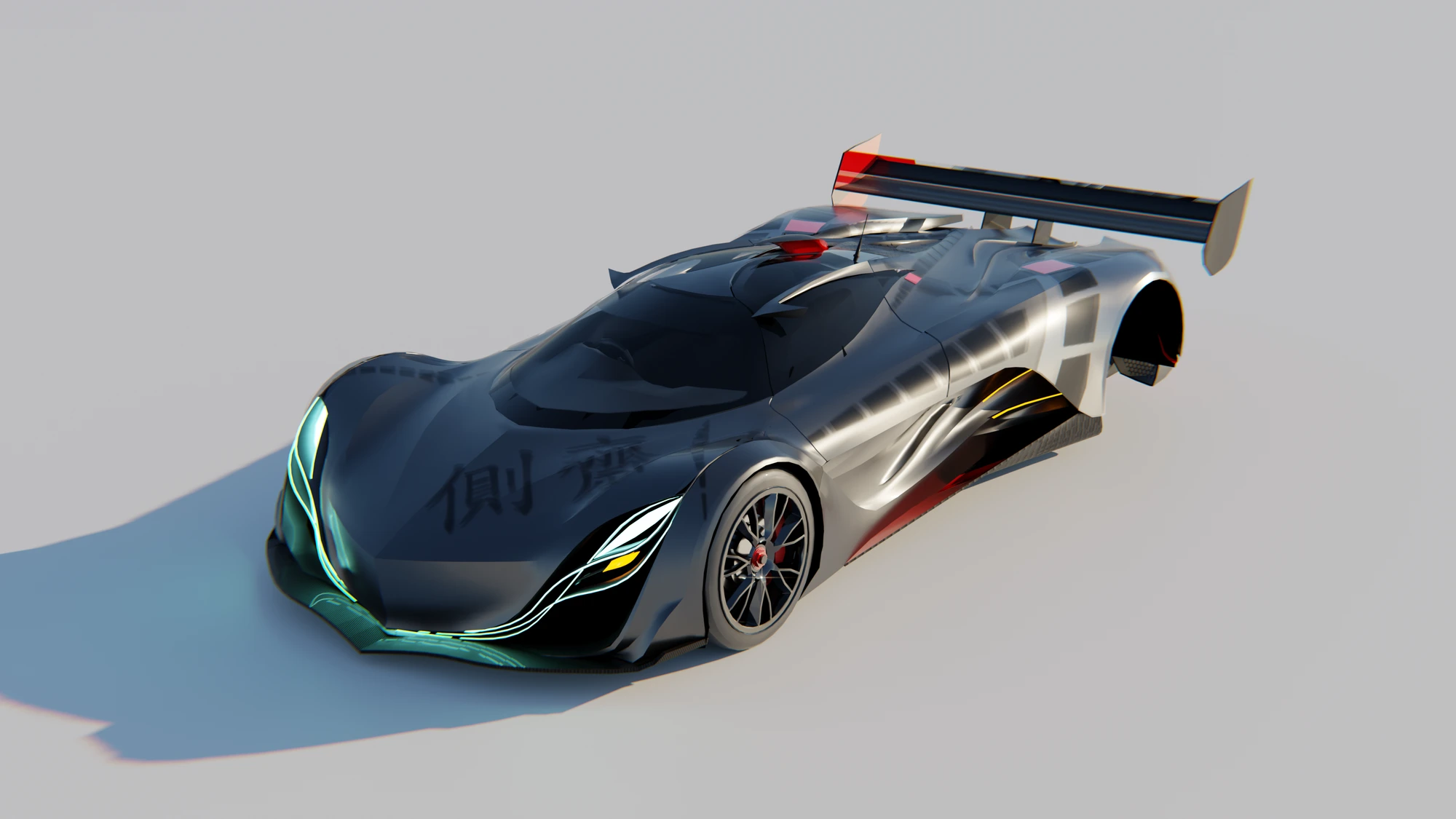
Modelled the Mazda Furai concept car for a browser-based driving game. Created game-optimised topology respecting the game's polygon budget constraints while maintaining the vehicle's aggressive Le Mans prototype design language. Textured with custom materials including metallic paint, carbon fibre accents, and tinted canopy glass. Delivered export-ready asset meeting client specifications for real-time performance. The vehicle was delivered as a body and reusable wheel module. The lead programmer duplicates the supplied wheel into the remaining wheel bays during integration. Project type: personal / freelance.
Technical specifications
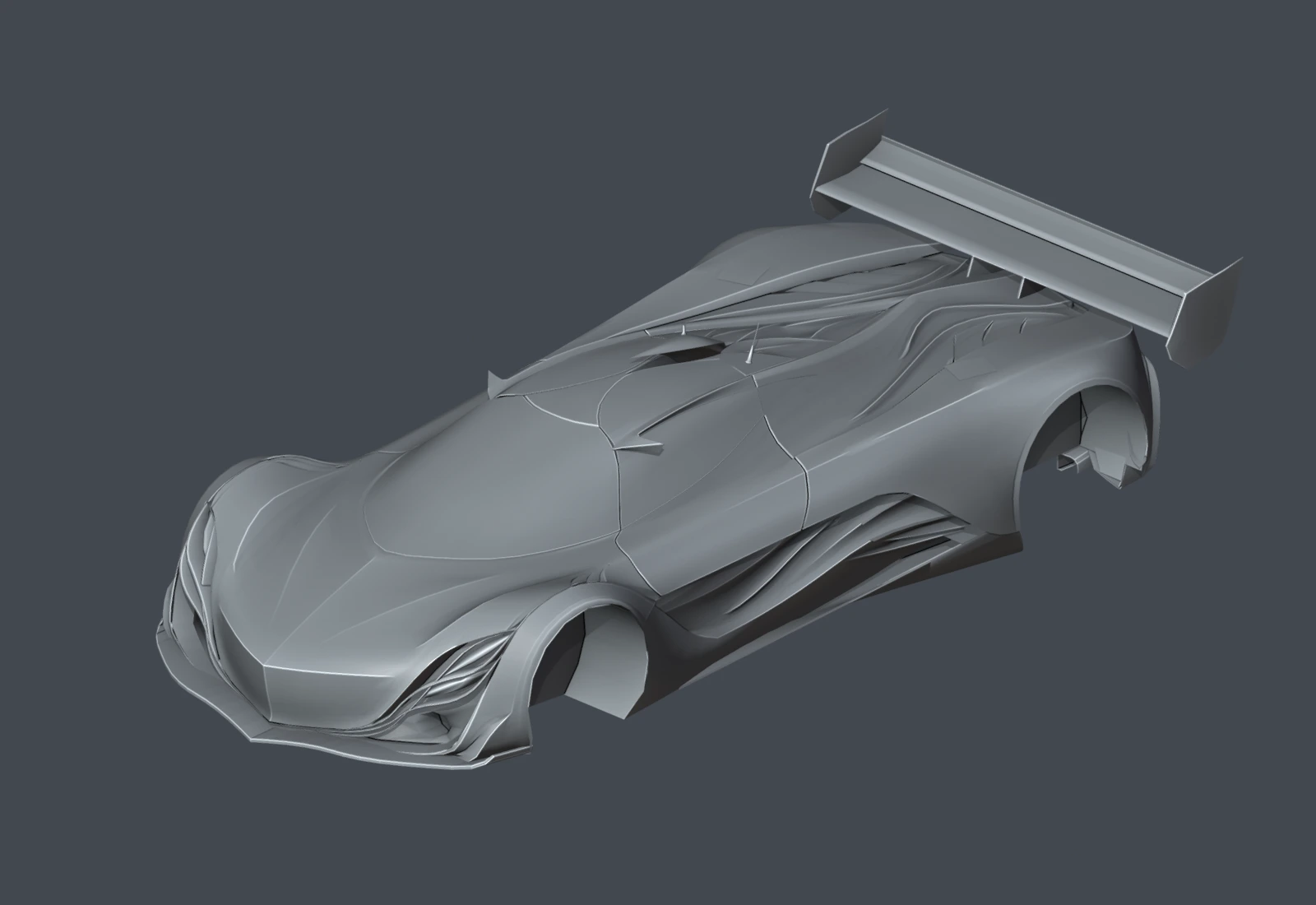
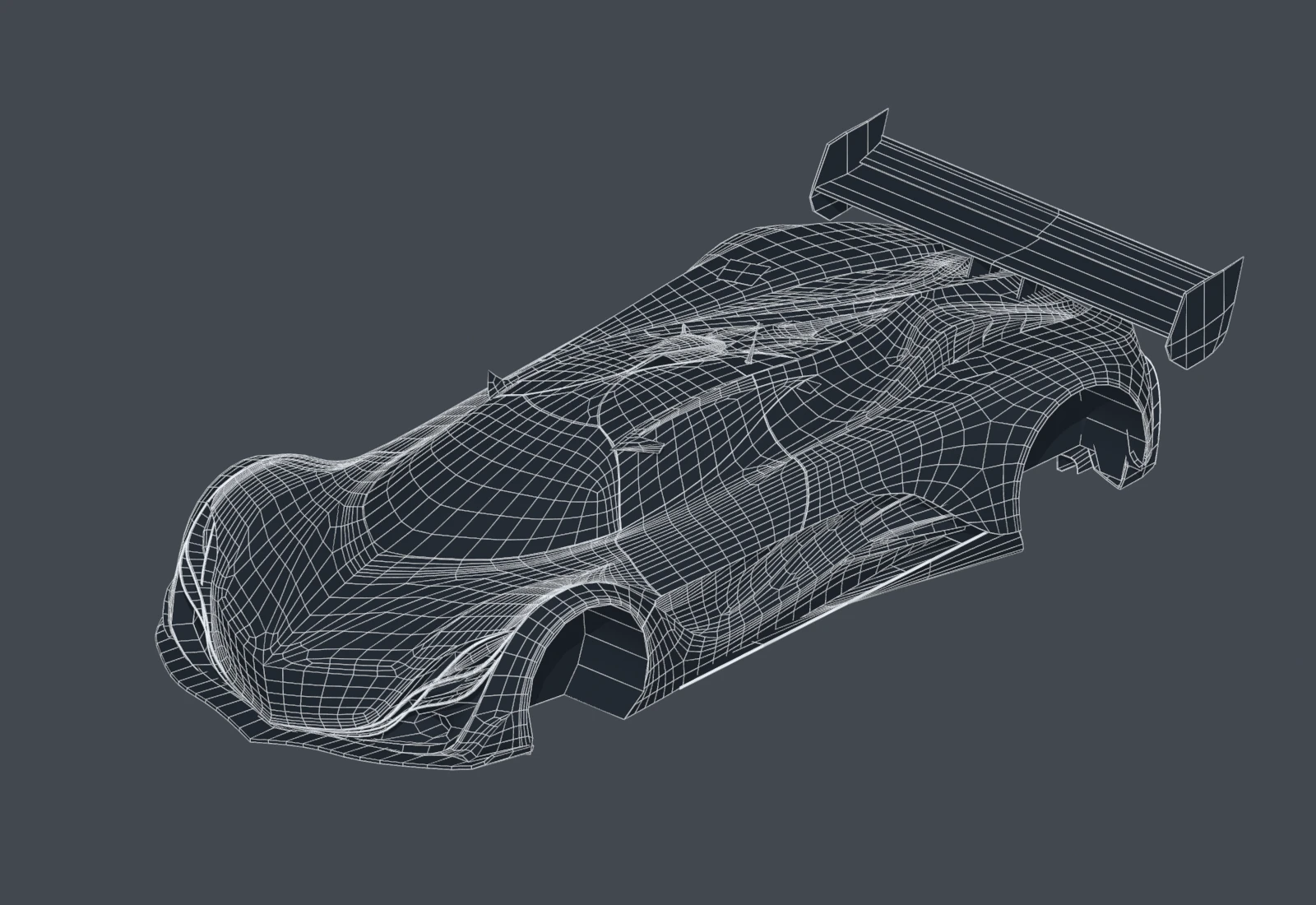
Body assembly in the selected portfolio Blender source, excluding wheel assemblies and the separate livery/decal overlays. The grille panels remain included.
- Base mesh
- 31,577 triangles
- Evaluated geometry
- 31,577 triangles
- Materials in scope
- 17
- Single wheel module
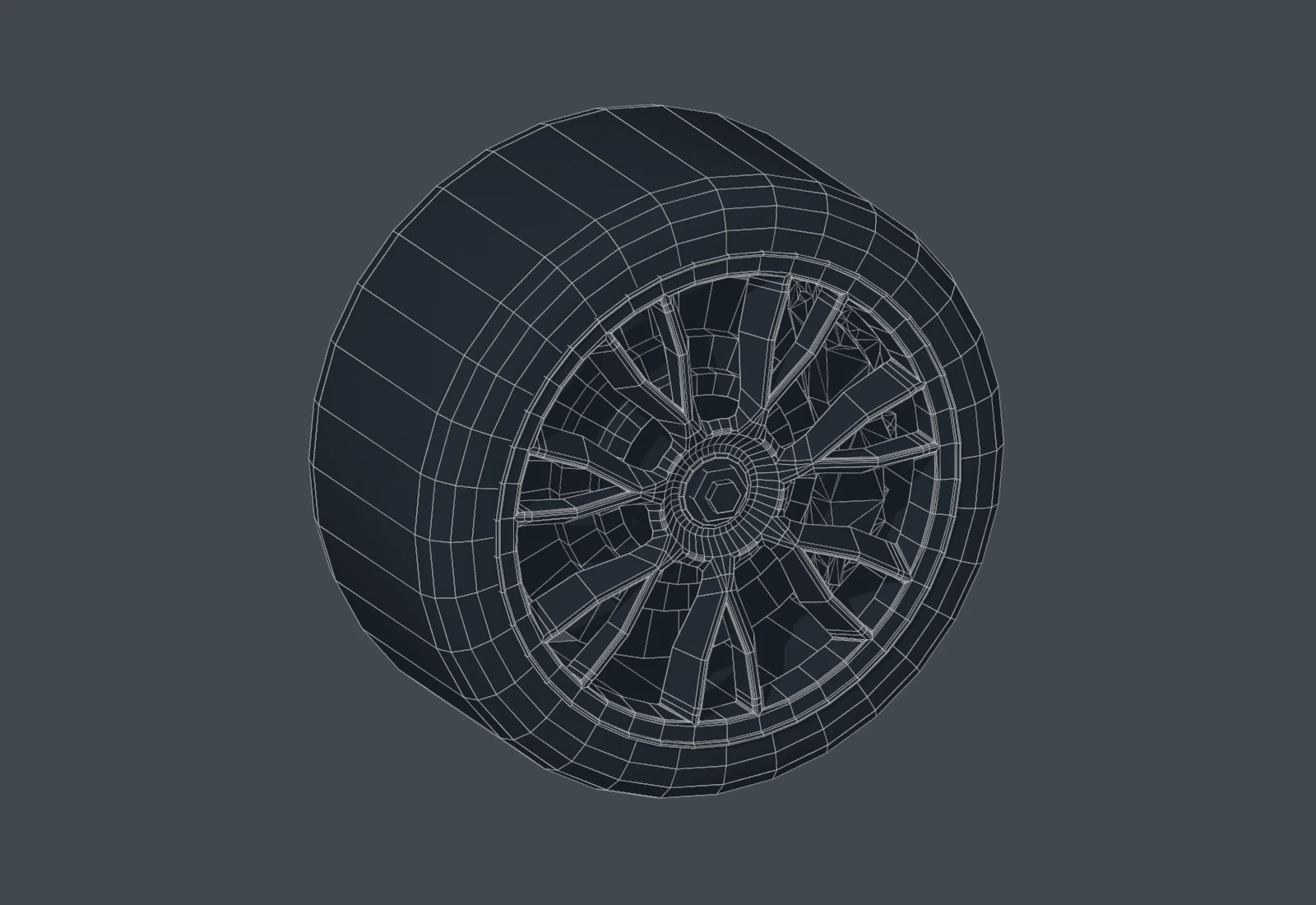
- 4,166 triangles across rim, tyre, brake, centre and nut
- Four-wheel assembly estimate
- 48,241 triangles: decal-free body + 4 identical wheel modules
- Separate decal overlays
- 1,884 triangles, excluded from the technical views and totals above
- Image texture in body scope
- 512 × 512 engine-cover mesh map
- Decal atlas
- 1,024 × 1,024 RGBA shared by both overlay meshes
Measured from the selected Blender source at frame 9, using Blender 5.2. Base counts triangulate the editable meshes; evaluated counts include saved viewport modifiers and repeated instances. Presentation staging is excluded. The four-wheel figure is an arithmetic assembly estimate, not a measured game export.
Solid view
Topology
Reusable wheel
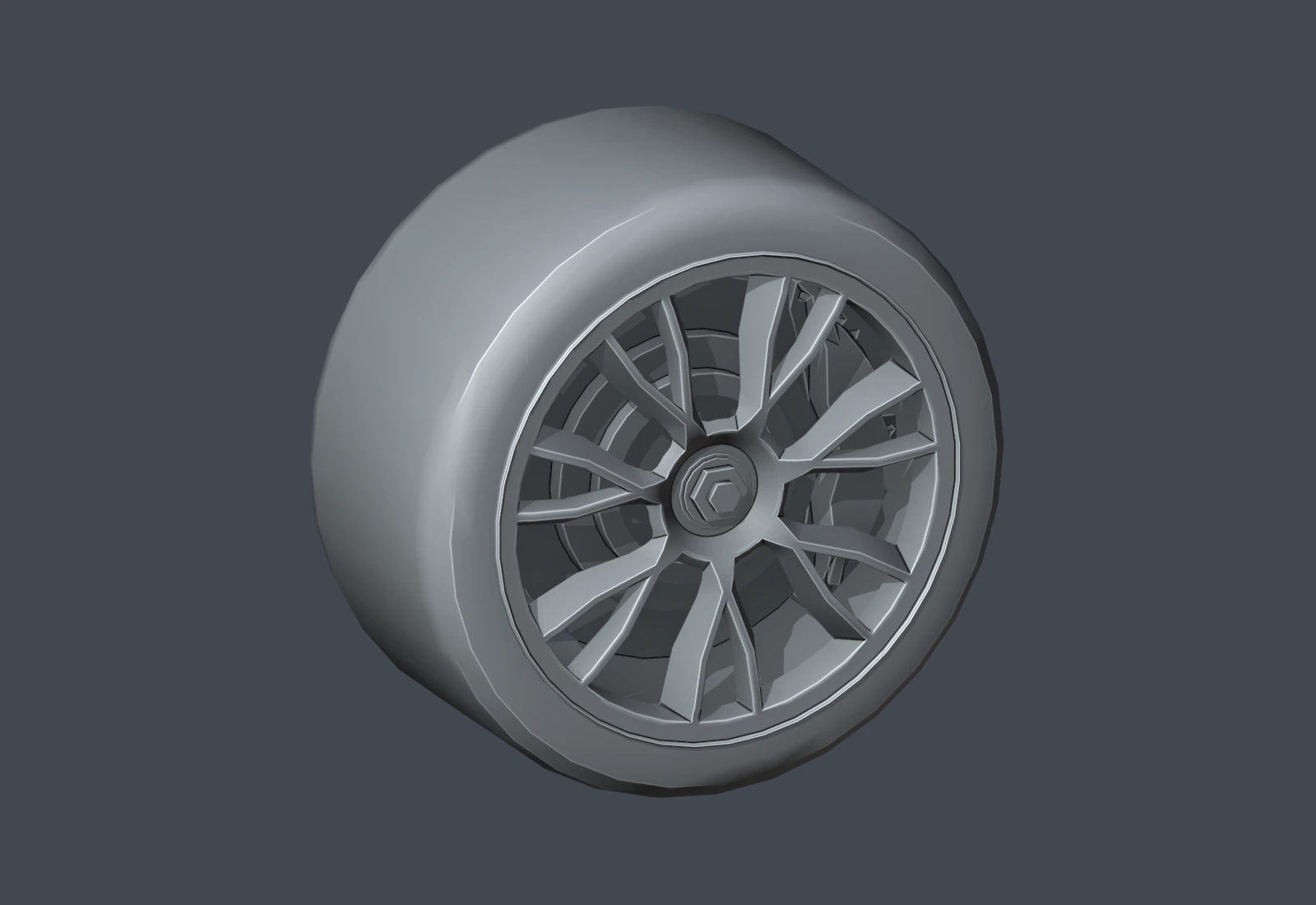
Wheel topology
Decals without interrupting the body topology
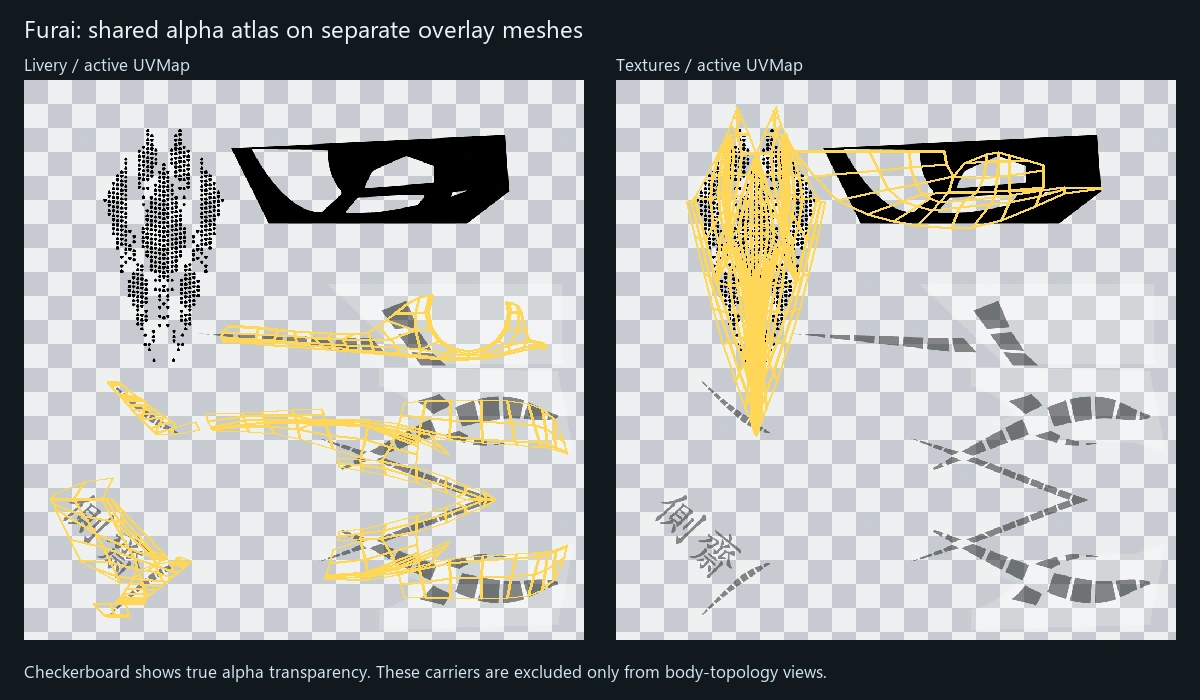
I placed the graphics on separate surface meshes and mapped them into a shared 1,024 × 1,024 RGBA atlas. The UVs select lettering, stripes, engine-cover pattern and window trim; image alpha supplies transparency. The two overlay meshes total 1,884 triangles and remain separate from the body construction.
Shared decal atlas